What a deck costs
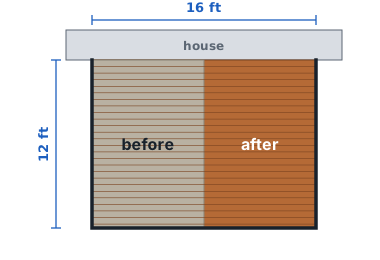
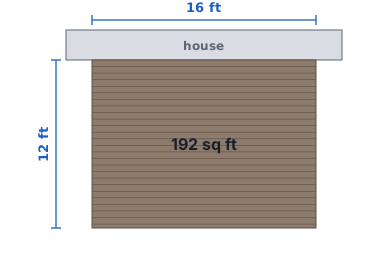
Decks are priced by the square foot. At our October 2026 prices a pressure-treated deck runs about $36 a square foot built, and a composite one about $56. A 12 × 16 deck is 192 square feet, so that's roughly $6,910 in treated wood or $10,750 in composite, before railing and stairs.
| Decking | Materials / sq ft | Labor / sq ft | Built / sq ft |
|---|---|---|---|
| Pressure-treated pine | $18 | $18 | $31–$41 |
| Cedar | $21 | $18 | $33–$45 |
| Composite | $30 | $26 | $48–$64 |
| PVC | $33 | $26 | $50–$68 |
And the same prices by size, for the platform alone:
| Deck size | Sq ft | Pressure-treated pine | Cedar | Composite | PVC |
|---|---|---|---|---|---|
| 10 × 10 ft | 100 | $3,600 | $3,900 | $5,600 | $5,900 |
| 12 × 12 ft | 144 | $5,180 | $5,620 | $8,060 | $8,500 |
| 12 × 16 ft | 192 | $6,910 | $7,490 | $10,750 | $11,330 |
| 16 × 20 ft | 320 | $11,520 | $12,480 | $17,920 | $18,880 |
| 20 × 20 ft | 400 | $14,400 | $15,600 | $22,400 | $23,600 |
What the square-foot price covers
Everything that holds you up. The footings in the ground, the posts and beams, the joists, the deck boards and the hardware that ties them together.
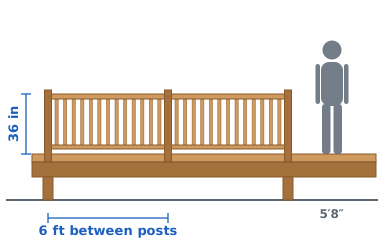
Railing and stairs are separate lines here, because some decks need a lot of both and some need neither. Wood railing adds about $32 a foot and wood stairs about $150 a step.
What makes a deck cost more
Height, more than anything. A deck a foot off the ground is a platform. Put the same deck eight feet up and it needs taller posts, bracing, a full flight of stairs and railing all the way around. Under the building code most of the US uses, any deck more than 30 inches above the ground has to have a guardrail.
Shape comes next. A rectangle uses lumber efficiently. Angles, curves and split levels all mean more cuts, more waste and more hours.
Then the boards. Composite and PVC decking cost several times what treated boards do, and they take longer to install because of the hidden fasteners and the careful spacing. The frame underneath is pressure-treated wood either way.
Wood or composite
Pressure-treated pine is the cheapest way to build a deck, and it lasts if you keep it sealed. Skip the sealing and it turns gray, then it starts to splinter.
Cedar costs a bit more, looks better and resists rot naturally. It's also soft, so it dents and scratches.
Composite and PVC cost the most up front and ask the least afterward: no stain, no sealer, a wash now and then. Two things catch people out. Dark boards get hot in full sun, hot enough to notice in bare feet. And a scratch doesn't sand out the way it does on wood.
Permits, and the board that matters most
Most places want a permit for a deck that's attached to the house or more than a little off the ground. It's worth having, because the inspector looks at exactly the things that make decks fail.
The big one is the ledger, the board that fastens the deck to the house. It has to be bolted or lagged into the house's frame, and flashed so water can't get in behind it. Nails are not enough. When a deck pulls away from a house, a badly attached ledger is the usual reason.
Building it yourself
A low, freestanding rectangle is a realistic first project. A raised deck attached to the house is structure, and the sizes of its beams and joists aren't something to guess. The American Wood Council publishes a free guide, DCA 6, with span tables for exactly this, and your building department will tell you what it expects to see on the plans.
The board and joist counts above are for budgeting. They assume boards 5½ inches wide and joists every 16 inches. Your plans decide the real numbers.
Fair questions
How many steps will I need?
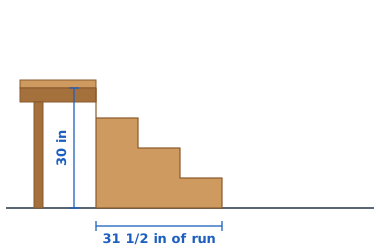
About one for every 7 inches of height. A deck 2 feet off the ground needs three or four.
Is railing included?
Only if you pick one above. The calculator runs it along the three open sides. For any other layout, the deck railing calculator takes a length in feet.
Is a ground-level deck cheaper?
Per square foot, usually. The posts are short and there's often no railing and no stairs. It still needs proper footings, and lumber rated for ground contact wherever the wood sits close to the soil.
Sources
- American Wood Council, DCA 6: Prescriptive Residential Wood Deck Construction Guide: ledger attachment, joist spans, guards and stairs for wood decks.
- International Residential Code: sections R312 (guards), R311.7.8 (handrails) and R507 (decks). Your city or state adopts and amends it, so check the local version.
- How we calculate: every suggested price behind this calculator, with the date it was last reviewed.