What deck railing costs per foot
Railing is priced by the linear foot, and the gap between materials is huge. Forty feet of wood railing, enough for three sides of a 12 × 16 deck, is about $1,280 installed at our October 2026 prices. The same forty feet in glass is about $7,600.
| Railing | Materials / ft | Labor / ft | Installed / ft | 40 ft installed |
|---|---|---|---|---|
| Wood | $15 | $17 | $27–$37 | $1,090–$1,470 |
| Composite | $25 | $18 | $37–$49 | $1,460–$1,980 |
| Vinyl | $22 | $16 | $32–$44 | $1,290–$1,750 |
| Aluminum | $40 | $20 | $51–$69 | $2,040–$2,760 |
| Cable | $90 | $40 | $111–$150 | $4,420–$5,980 |
| Glass | $140 | $50 | $162–$218 | $6,460–$8,740 |
Do you need one?
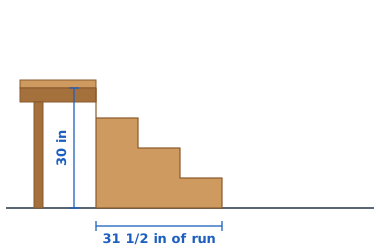
If the deck floor is more than 30 inches above the ground, yes. That's the rule in the model building code most of the US follows. Below that it's your call, though anyone with small kids tends to want one anyway.
The same code sets the height: at least 36 inches for a house. Some states and cities ask for 42, so check before you buy a kit.
The 4-inch rule
The gaps in a railing have to be small enough that a 4-inch ball can't pass through. It's there so a small child can't slip through or get stuck. That's why balusters sit so close together, and why our count puts one every 5 inches.
Cable railing has to pass the same test, which is harder than it sounds. Cables flex when you push on them, so they're run about 3 inches apart and pulled tight.
Choosing a material
Wood is the cheapest to buy and the most work to keep. It needs the same stain or sealer as the deck, and brushing every baluster is slow.
Composite and vinyl cost more and need almost nothing. Most are sold as kits with the brackets in the box.
Aluminum is thin, strong and powder-coated. It blocks less of the view than wood or composite, and it never needs paint.
Cable and glass are what you buy when the view is the point. Both cost several times what wood does. Cable needs very solid end posts because of the tension on them. Glass needs cleaning, and it stops a pleasant breeze just as well as it stops the wind.
Where the money hides
In corners and ends. Every one needs a post, and posts are the expensive part of most systems. A deck with a lot of jogs costs more per foot than a plain rectangle.
In stairs. Stair railing is cut to the angle of the stairs, which takes longer. Once a stair has four or more risers it also needs a handrail you can wrap your hand around, and a flat board on top of the rail doesn't count.
And in a gate at the top of the stairs, the small extra that parents of toddlers always end up adding.
Installing it yourself
Kits make the rail sections easy. The posts are the part that has to be right. A post that's only screwed to the outside of the rim board will wobble, and a railing is there for the day somebody leans on it. Posts should be bolted through the framing, with blocking behind them.
Fair questions
How much railing does my deck need?
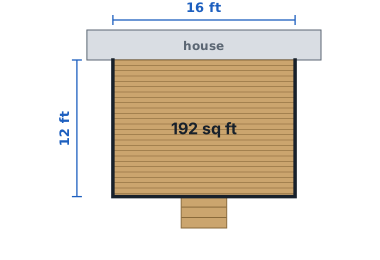
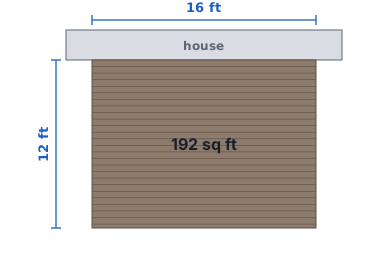
Add up the open sides. A 12 × 16 deck with its 16-foot side against the house has 12 + 16 + 12, so 40 feet, less the width of the opening for the stairs.
Can I mix materials?
Yes, and it's a good way to save. Wood posts and rails with aluminum balusters cost a little more than all wood, look sharper and leave far less to stain.
Is the railing in the deck calculator the same price?
Yes. The deck cost calculator uses these per-foot prices for wood, composite and aluminum, measured along the three open sides.
Sources
- International Residential Code: sections R312 (guards), R311.7.8 (handrails) and R507 (decks). Your city or state adopts and amends it, so check the local version.
- American Wood Council, DCA 6: Prescriptive Residential Wood Deck Construction Guide: ledger attachment, joist spans, guards and stairs for wood decks.
- How we calculate: every suggested price behind this calculator, with the date it was last reviewed.